
Designing for the Smallest Lives in the House
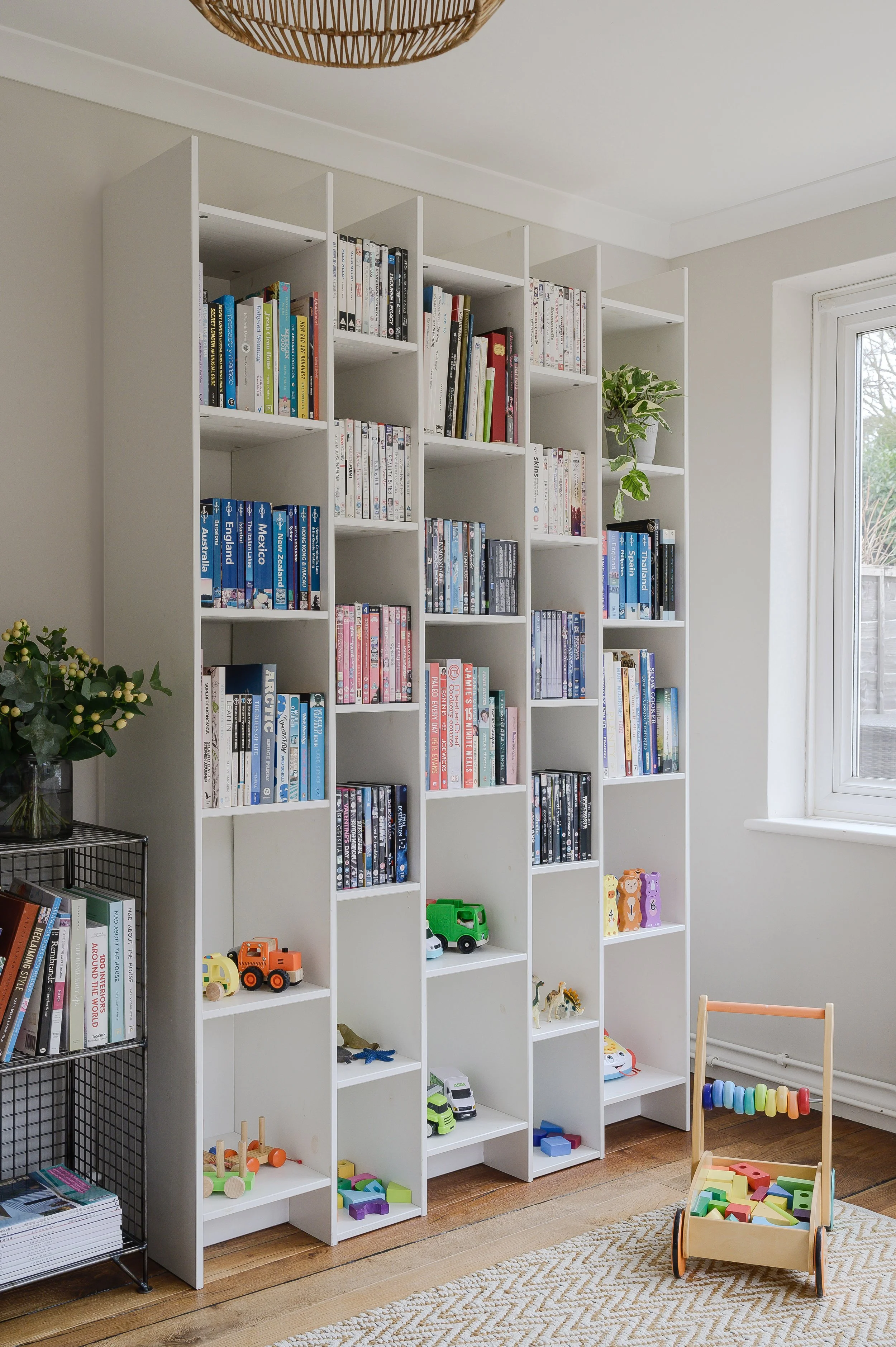
Motherhood has a way of sharpening your awareness of space. Before children, a room might be judged on its proportions, its light, or the elegance of its materials. With children, those things still matter, but function becomes the quiet foundation beneath everything. You begin to see a home not only as it is today, but as a landscape in which small lives unfold.
Two Children, Two Worlds
Having both a daughter and a son has made this even more apparent. Not because their interests fall into neat categories, far from it, but because each child inhabits space so differently.
Our son, now seven, is a collector. His world is built from small discoveries: pockets of stones, curious bits of string, feathers, shiny objects that may or may not have a purpose. To him, they are treasures. Add to that his growing stacks of books, his fascination with science, and a constant stream of drawings and inventions, and you quickly realise that storage is not simply practical, it is essential to honouring how he explores the world.
“He needs surfaces to display, drawers to empty and refill, and shelves that encourage independence.”
Our daughter, four, moves through space differently. She gravitates toward storytelling and imagination. Books again play a central role, but alongside them are her teddies, her tiny figures, and the delicate ecosystems of ‘small world’ play that emerge across bedroom floors and windowsills. Where our son collects, she curates. Where he loves to experiment, she loves to create stories. Their personalities and interests shape the way they inhabit space, and the home must respond accordingly.
Birth Order and Adaptability
Birth order also shapes their experience. The first child grows up in one version of a household; the second arrives into another. Routines shift, priorities change, and the physical environment adapts in subtle ways. What was once a quiet corner for one becomes a multi-purpose space for the other. Even within the same family, no two children will ever have the same home experience, and adaptability in design is key.
Storage as a Design Hero
Storage, in this context, becomes a quiet hero. It is not merely about tidiness but about creating systems that support curiosity and imagination.
Low shelves for books that can be reached independently
Boxes that make sense to a child rather than an adult
Surfaces where collections can live temporarily before being reorganised
These small interventions preserve the integrity of a child’s world while keeping the home functional. A clutter-free home might be ideal, but a child-friendly home is thoughtful, resilient, and flexible.
Function Beyond Bedrooms
Beyond bedrooms, the practicalities of family life shape the rest of the house. We live in a village surrounded by woodland, which is beautiful but relentlessly muddy for much of the year. Our boot room has become one of the hardest-working spaces in the house. Boots, coats, baskets, hooks at child height: everything has its place because it must.
Similarly, we are planning an upstairs laundry room. Anyone with young children will immediately understand the logic. The volume of washing is considerable, and the distance between bedrooms and laundry becomes surprisingly relevant. Thoughtful placement saves time, effort, and energy.
“Function here is not aesthetic compromise; it is design doing its job quietly, without fuss.”
Bedrooms as Entire Worlds
For children, a bedroom is rarely just a place to sleep. It is a library, a laboratory, a theatre, a sanctuary. It holds their favourite books, their evolving interests, and the objects that feel important to them at that particular moment in childhood.
Designing these spaces requires a certain humility. Durable materials, flexible storage, and space to grow matter far more than anything overly precious or fixed. Rooms should support imagination, not dictate it. Children will rearrange, repurpose, and reinvent these spaces daily, and a good design accommodates that without resistance.
Sustainability also plays a role. Choosing pieces that can withstand wear, materials that are durable yet natural, and storage that grows with the child reduces waste and fosters a slower, more considered approach to accumulating objects. Thoughtful design is not only functional and beautiful; it is responsible.
Quiet Systems, Full Lives
Motherhood has made me appreciate adaptability, patience, and the quiet ingenuity of design in a deeper way. A well-designed family home does not strive for perfection; it creates systems that allow life to unfold with ease.
It anticipates muddy boots, stacks of books, small collections of treasures, and imaginary worlds that appear overnight on bedroom floors. It respects the individuality of each child while supporting the household as a whole.
“Ultimately, designing for children is about recognising that their experiences of space are just as meaningful as our own. Perhaps even more so.”
Their rooms, messy, busy, and full of small stories, are the landscapes in which their childhood memories are being made. The challenge and the joy are creating homes that can hold those lives, fully, beautifully, and with quiet intention.
